Mariche Loewen
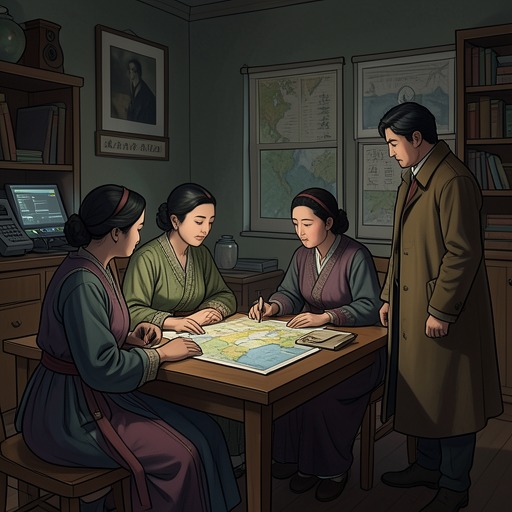
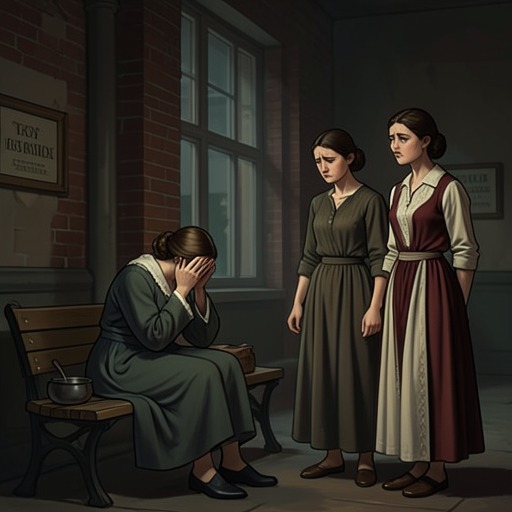
Women TalkingMariche Loewen is one of the women weighing whether to leave Molotschna Colony after violence against women has made their safety, faith, and future subjects of collective debate. She refuses to let the discussion rest on an abstract question of whether women are like animals: she presses the group to confront whether they should seek revenge or forgive the men, and whether forgiveness has been turned into a condition for belonging in the community and entering heaven. Her arguments keep the consequences of the decision in view, especially the danger of replacing one kind of coercion with a choice whose costs the women cannot yet know.
Identity and Circumstances
Mariche speaks from a life marked by vulnerability within her own household. The narrative notes a lasting injury to her left hand, while her exchange with Ona points to the difficulty Mariche has faced in resisting her husband, Klaas Loewen, and protecting her children. These circumstances matter to her arguments: the question of whether to stay and fight is not a theoretical test of courage for someone untouched by violence. It bears directly on the safety of a wife and mother who has struggled to get out of harm’s way.
Mariche is also part of a community in which women’s religious standing is bound up with men’s authority. The elders’ judgment of Ona Friesen makes that pressure concrete: Ona is treated as beyond redemption because of Narfa, and her pregnancy following the assaults leads others to consider marrying her to Julius Penner. Ona rejects the proposed match, saying that Julius deserves better and that marrying him would taint him with sin because she is not a virgin. This episode is not Mariche’s own story, but it forms part of the meeting’s larger dispute over who defines sin, marriage, and a woman’s worth.
Forgiveness, Exile, and the Vote
Mariche raises the spiritual stakes of the decision plainly. In her view, the women risk being forced to leave the colony if they do not forgive the men or accept their apologies; excommunication would, according to Molotschna’s rules, threaten their place in heaven. She asks whether seeking justice for harm and securing eternal life are being presented as mutually exclusive. Her objection is not simply to forgiveness, but to being placed in a position where forgiveness becomes the price of avoiding exclusion.
She develops that concern by warning the women against entering precisely such a trap. If the choice is framed as forgiveness or eternal life, they may be driven to accept a decision under pressure rather than make it freely. The question helps expose a larger contradiction in the meeting: the women are asked to exercise moral responsibility while facing rules that may punish them for refusing the terms set by their community.
The Cost of Leaving—and of Staying
Mariche does not treat leaving as an uncomplicated answer. After the discussion turns toward departure, she asks what happens next: even if the women believe they have acted according to God’s will, what will they do when they are hungry or afraid? The questions place material survival alongside moral conviction. A decision may be defensible in principle and still bring hardship, and Mariche insists that the women reckon with that future rather than treating departure as a guaranteed resolution.
She also challenges the apparent alternative of staying without fighting. Ona asks whether Mariche truly wants to remain without resisting, given how difficult it has been for her to stand up to Klaas, protect her children, or escape danger. The exchange makes the limits of a simple three-way choice visible: staying can expose the women to further violence, while fighting risks violating the pacifism they profess. Mariche’s personal circumstances give the dilemma force, even as Ona’s question confronts her with the distance between a proposed course and the realities of her home.
Faith, Authority, and Collective Responsibility
Agata Friesen argues that pacifism rules out making Molotschna a battlefield. If the women stay in a setting where violence is expected and some may want to kill their attackers, Agata says, they risk betraying their faith; leaving may better preserve commitments to peace, love, and forgiveness and teach those values to their children. Mariche’s questions test this reasoning against the uncertainties of life outside the colony. Their disagreement is not simply faith against doubt: both positions turn on what faith requires and what consequences the women can responsibly accept.
The women’s authority to interpret religious obligations is also contested. Salome Friesen points out that they cannot read the Bible and have been told by their husbands that it commands submission. That claim connects the debate over leaving to women’s restricted access to scripture and to the power of men to present their own instructions as divine law. Agata, in turn, grounds the decision in the women’s collective responsibility as mothers: they have considered their children’s welfare according to their understanding of faith, love, and peace, and must act on that judgment.
Relationships and Narrative Role
Mariche’s conflict with Klaas stands behind her exchanges with the other women. Greta Loewen sharply rebukes her for directing anger at the meeting while Klaas is expected to return home, take animals to sell for bail money, and again put Mariche and the children at risk. Greta predicts that Mariche will say nothing to him and instead turn her anger on the women. The rebuke is severe, but it identifies how danger at home can surface as conflict within the group—and how the women’s meeting must confront not only public rules but intimate patterns of power.
Her relationship with the women is not defined only by disagreement. Mejal Loewen and Salome Friesen may often be at odds, yet Mejal crosses to Salome’s side to embrace her during the crisis, illustrating how support can emerge across existing tensions. Against that collective background, Mariche’s objections serve an essential purpose: she refuses to let the women’s resolve conceal the risk of hunger, fear, exclusion, or renewed danger. The evidence does not settle her personal final position. It leaves her as a participant who insists that moral certainty be tested against the unequal and practical costs the women will bear.